Introduction
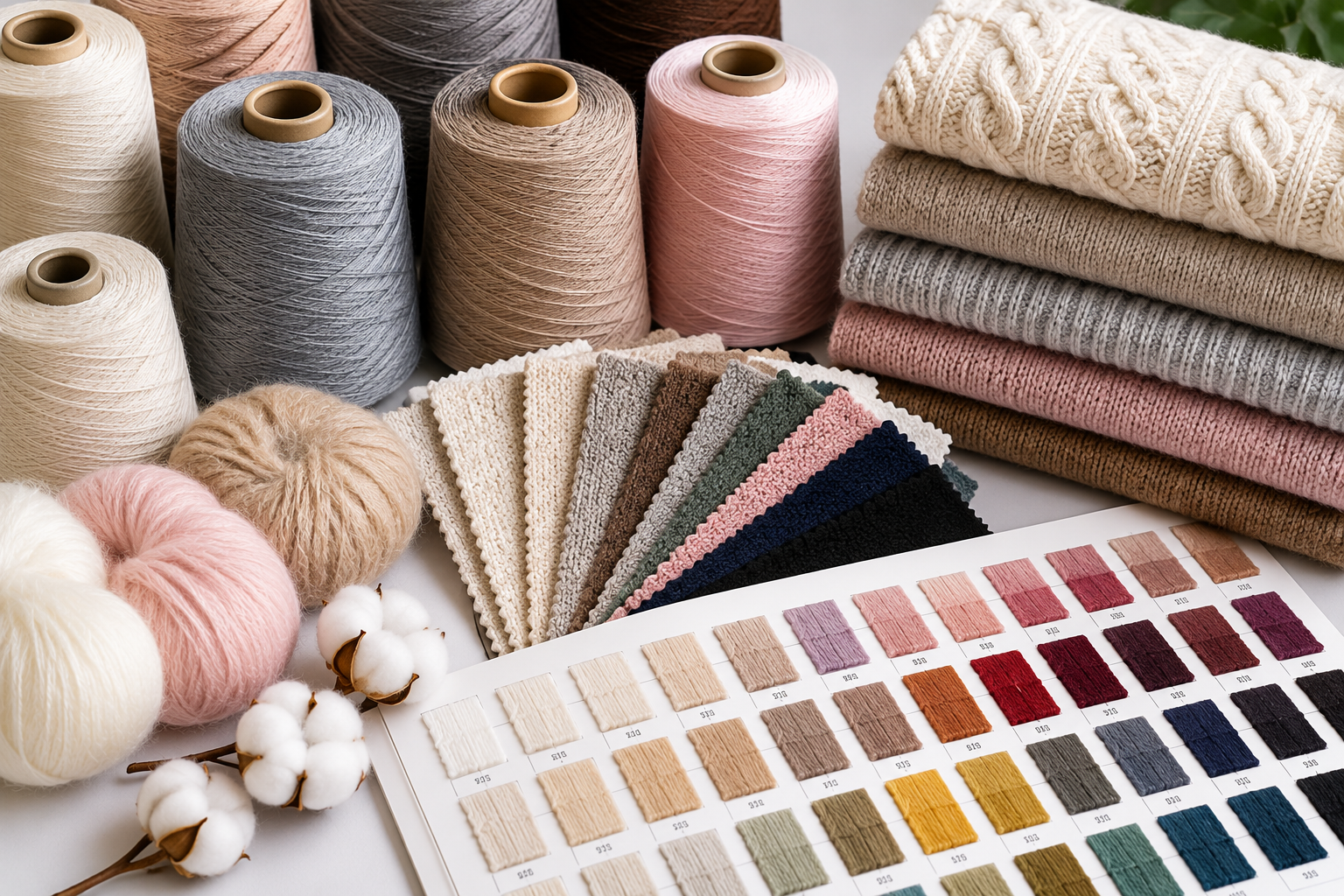
Choosing the right yarn is one of the most important decisions when developing women’s knitwear. The yarn affects the garment’s hand feel, appearance, weight, stretch, durability, price, and overall wearing experience.
For fashion brands, wholesalers, and importers, choosing yarn based only on price or appearance can lead to unexpected results during sampling or bulk production.
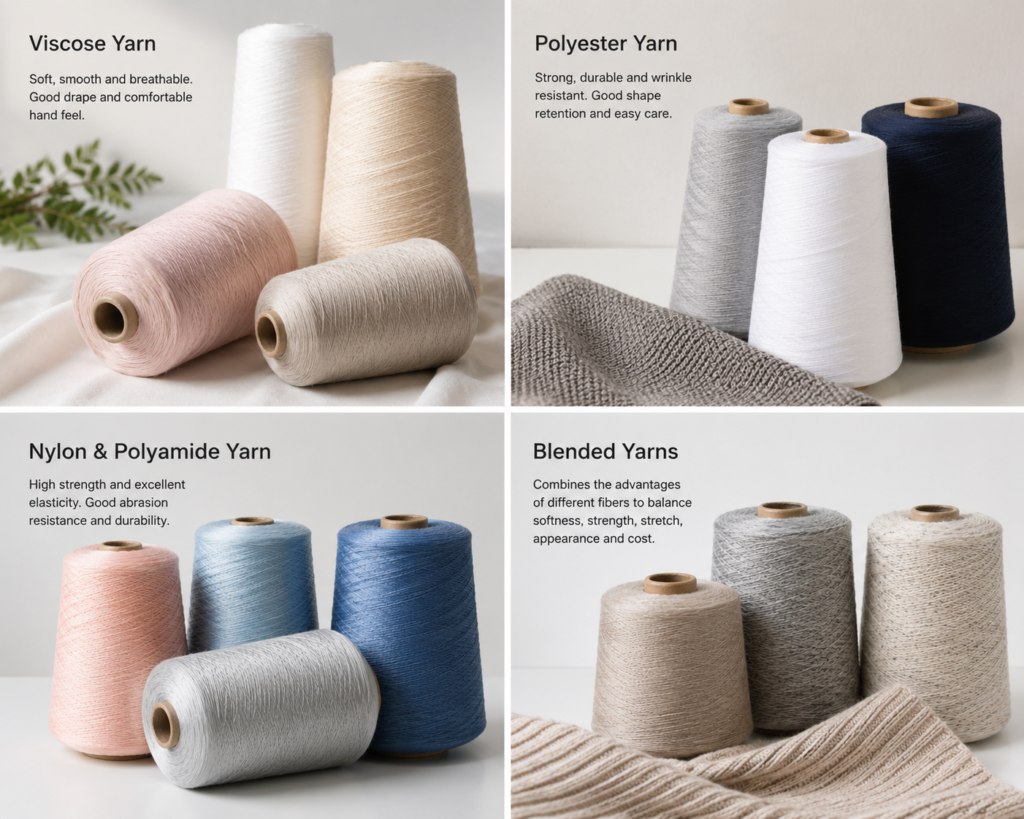
At Janbow Apparel, we support custom women’s knitwear development using materials such as viscose, polyester, nylon, polyamide, and blended yarns. In this article, we explain the key factors to consider when choosing yarn for sweaters, cardigans, pullovers, and knit dresses.
Why Yarn Selection Matters
The same knitwear design can look and feel very different when made with different yarns.
Yarn affects several important characteristics of a garment, including:
- Hand feel
- Fabric weight
- Stretch and recovery
- Surface appearance
- Drape
- Durability
- Color effect
- Production cost
For example, a soft and lightweight knit may require a different yarn solution from a structured cardigan or a heavier winter sweater.
This is why yarn selection should be considered during the early development stage rather than after the design has already been finalized.
Viscose Yarn
Viscose is commonly used in women’s knitwear because of its soft hand feel and comfortable drape.
It can work well for lightweight sweaters, cardigans, pullovers, and knit dresses where a smooth and comfortable feeling is important.
Viscose can also create an attractive surface appearance and is often suitable for fashion-oriented knitwear designs.
However, the final performance depends on the specific yarn construction, blend, knitting structure, and finishing process.
Polyester Yarn
Polyester is widely used in knitwear because of its practical properties and versatility.
It can be used for different types of sweaters, cardigans, pullovers, and knit dresses. Depending on the yarn construction and knitting structure, polyester knitwear can achieve different textures and appearances.
Polyester can also be combined with other fibers to balance appearance, hand feel, durability, and cost.
For commercial collections where consistent production and practical performance are important, polyester can be a useful option.
Nylon and Polyamide Yarn
Nylon and polyamide are often used when strength, durability, stretch, or a specific fabric performance is required.
They can be used alone or blended with other fibers depending on the design requirements.
In women’s knitwear, nylon or polyamide may be considered for lightweight garments, fitted styles, stretch fabrics, or blended yarn solutions.
The exact yarn choice should be based on the design, desired hand feel, garment structure, and target price.
Blended Yarns
Blended yarns combine different fibers to achieve a balance of properties.
For example, a blend may be developed to improve softness, durability, stretch, appearance, or cost compared with using a single fiber.
Blended yarns are especially useful when a customer wants to achieve a specific combination of performance and appearance.
For custom knitwear, the right blend depends on the product rather than simply choosing the most expensive material.
How Yarn Affects the Final Garment
Yarn selection is closely connected with the design itself.
A lightweight knit dress may require a yarn that provides good drape and a comfortable hand feel. A structured cardigan may need a different yarn construction to maintain its shape.
Other factors also need to be considered:
Garment Weight
Different yarns and yarn counts can create different fabric weights. This affects how the garment feels and how suitable it is for different seasons.
Hand Feel
The hand feel is one of the first things customers notice when touching a garment. Softness, smoothness, dryness, and texture can all vary depending on the yarn.
Stretch and Recovery
For fitted knitwear, stretch and recovery can be particularly important. The yarn, knitting structure, and finishing process all contribute to the final result.
Drape and Shape
Some yarns create a softer drape, while others can produce a more structured appearance.
The right choice depends on the silhouette the customer wants to achieve.
Yarn Selection Should Start With the Product
Instead of asking which yarn is “best,” it is usually more useful to ask which yarn is best for a specific product.
For example:
- Lightweight knit dress → focus on drape and comfortable hand feel
- Fashion pullover → consider appearance, texture, and hand feel
- Structured cardigan → consider shape retention and fabric weight
- Fitted knitwear → consider stretch and recovery
- Commercial basic styles → consider consistency, performance, and cost
The same yarn may work very well for one style but not be the best option for another.
What Customers Should Tell the Manufacturer
When requesting a knitwear quotation or sample, customers do not always need to know the exact yarn specification.
If the yarn is already confirmed, provide the composition and available details.
If the yarn has not been decided yet, customers can instead provide:
- Reference photos
- Target hand feel
- Target garment weight
- Season
- Target market
- Target price
- Desired stretch
- Desired appearance
With this information, the manufacturer can discuss suitable yarn options before sampling.
Sample Testing Is Important

Even when a yarn looks suitable on paper, the actual result should be confirmed through sampling.
A sample allows the customer to evaluate the yarn together with the knitting structure and garment design.
During sample review, customers can check:
- Hand feel
- Weight
- Drape
- Stretch
- Color
- Surface appearance
- Measurements
- Overall garment shape
This is especially important for custom knitwear because the yarn and knitting structure work together to determine the final result.
Work with Janbow Apparel
At Janbow Apparel, we support custom women’s knitwear development and production for fashion brands, wholesalers, and importers.
Our main products include women’s sweaters, cardigans, pullovers, and knit dresses. We work with materials including viscose, polyester, nylon, polyamide, and blended yarns according to product requirements.
Whether you already have a specific yarn specification or need help choosing a suitable material for a new design, we can discuss material options during the sample development process.
Start Your Custom Knitwear Project
Developing a new women’s knitwear collection?
Contact Janbow Apparel for catalogs, material discussion, sample development, quotation, and custom production support.